What is AD?
Anaerobic digestion is a naturally occurring biological process involving the decomposition of organic matter in the absence of oxygen. The process is essentially the same as composting, except that it occurs in an air-tight vessel that prevents oxygen from entering the system.
During the anaerobic digestion process, bacteria breakdown organic feedstock and produce a methane-rich-gas called 'biogas' and digestate (the solid residue resulting from the anaerobic digestion process).
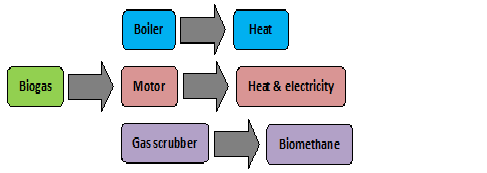
Biogas: Biogas is a carbon neutral gas that can be combusted in a boiler to produce renewable heat, combusted in a motor/combined heat and power system to produce renewable electricity and heat, or upgraded to produce biomethane (a renewable natural gas substitute). Typical raw biogas composition is ~60% methane, ~40% carbon dioxide, and ~1 - 5% other components (such as nitrous oxide, oxygen, water, etc.).
Digestate: Digestate can be separated into liquid and solid digestate using a screw press or other technology. The liquid digestate can be applied directly onto land/growing crops as a high value fertilizer. While the anaerobic digestion process will result in the loss of up to 5% - 10% of nitrogen, there is no loss of any other nutrients. Furthermore, this minor loss of nitrogen is countered by a dramatic improvement in the availability of nutrients. This improvement facilitates improved plant uptake and crop growth. Solid digestate can used as a fertilizer/soil amendment or used as animal bedding instead of sand/sawdust/etc.
- AD fact sheet 1.pdf (165 KB)

- AD fact sheet 2.pdf (353 KB)